
Travel
Planning a Multi-City Trip to Poland: What Should Be Organised Before You Arrive?


A multi-city trip to Poland can be straightforward on paper. Choose Warsaw, Kraków and Gdańsk, book a few hotels, connect the cities by train and fill the remaining days with sightseeing. The difficulty appears when all those separate bookings have to work together. Arrival times affect transfers. Transfers affect hotel check-ins. Day trips compete with time in the cities themselves. Popular attractions may need advance planning, while a route that looks efficient on a map may involve too many hotel changes to be enjoyable. For travellers visiting several parts of Poland, the most useful preparation is therefore not creating the longest possible list of places to see. It is making sure that transport, accommodation, activities and available time form one realistic itinerary.
Begin with the international arrival and departure points
Before deciding what to see, establish where the journey will actually begin and end.
Flying into Warsaw and departing from Kraków, for example, creates different possibilities from booking a return flight through the same airport. An open-jaw itinerary can sometimes reduce unnecessary backtracking, particularly when a journey covers several regions.
This is easy to overlook when flights are booked before the itinerary has been considered. A traveller may find an attractive return fare to Warsaw and only later realise that the final part of the holiday is in southern Poland. The last day then includes a journey back towards the original airport rather than time at the destination.
The best option depends on flight availability, price and the route itself, but arrival and departure airports should be treated as structural parts of the itinerary rather than administrative details.
Do not confuse nights with sightseeing days
A seven-night journey does not provide seven complete sightseeing days.
The first day may involve immigration, baggage collection, an airport transfer and hotel check-in. The final day may be dominated by the journey to the airport. Every move between cities also takes time beyond the scheduled train or driving duration.
This distinction matters when evaluating packaged itineraries as well as independent plans. A programme containing four destinations in seven nights may sound comprehensive, but the useful question is how many hours are actually available in each place.
Count full days first. Then identify partial days and transfer days. Only after that should major attractions and excursions be assigned to the schedule.
The result may look less ambitious, but it is usually much more realistic.
Decide which cities will be bases
A base is more than somewhere to sleep. It is a place from which part of the trip can be explored without repeatedly packing and changing hotels.
Warsaw, Kraków and Gdańsk are natural bases for many first-time itineraries because each provides access to a major city as well as possibilities for exploring its wider region. Other cities can perform the same role depending on the interests of the traveller.
The important decision is how many bases the trip can support.
Staying one night in several places may maximise the number of destinations listed in the itinerary, but it also multiplies check-ins, check-outs and luggage transfers. Spending three nights in one place can create enough time for the city itself, a day trip and an unscheduled evening.
For many travellers, reducing the number of hotels is one of the simplest ways to improve a multi-city journey.
Connect the route geographically
Once the main bases have been chosen, look at their order.
A sensible itinerary should minimise unnecessary backtracking unless there is a good reason for it. That sounds obvious, yet routes are often assembled attraction by attraction rather than geographically.
Think of the trip as a continuous line. Where do you arrive? Which destination follows naturally? Where does the journey end? Can a smaller place be visited between two bases rather than as a separate return excursion?
This approach can reveal opportunities that are not obvious when each destination is planned independently.
It also makes transport easier to evaluate because every journey has a clear role within the wider route.
Use different transport for different parts of the trip
There is no requirement to choose one mode of transport and use it throughout Poland.
Rail can be practical between major cities. Private road transport can make more sense when a route includes smaller towns, rural areas or several stops in one day. Organised excursions may simplify destinations where the logistics of visiting independently are disproportionate to the time available.
A rental car can provide flexibility, but it also introduces parking, navigation and collection or return arrangements. For a journey concentrated on major city centres, those responsibilities may add little value. For a rural or outdoor itinerary, the calculation can be very different.
The right question is therefore not “What is the best way to travel around Poland?” It is “What is the most practical transport for this particular section of the route?”
A mixed approach is often the answer.
Know which arrangements benefit from advance booking
Not every hour of a holiday needs to be reserved before arrival. In fact, an itinerary with no flexibility can become tiring very quickly.
Some arrangements, however, are structural. Accommodation, major inter-city journeys and important guided visits may need to be secured in advance, particularly when dates are fixed. The same applies to experiences with limited capacity or specific admission arrangements.
Other parts of the trip can remain deliberately open. Restaurants, neighbourhood walks, secondary museums and free time can often be fitted around the fixed elements.
One useful approach is to divide plans into three groups: essential bookings, preferred activities and optional ideas. The first group defines the skeleton of the journey. The other two provide flexibility around it.
This is particularly valuable on longer trips, when weather, energy levels and unexpected discoveries can change what travellers want to do.
Treat accommodation as part of the logistics
Hotel selection is often reduced to price, star rating and photographs. On a multi-city itinerary, location can be equally important.
A hotel that appears cheaper may create additional transport every morning and evening. Conversely, accommodation close to the places a traveller actually wants to explore can reduce the amount of local travel required.
Transport connections also matter. Someone leaving early by train may value convenient access to the station, while a traveller relying on private transfers has different priorities.
The same hotel is therefore not equally convenient for every itinerary.
This becomes even more important for groups. Luggage volume, room configurations, mobility requirements and the time required to move several people should be considered before accommodation is confirmed.
Build day trips around the base, not around a checklist
Poland’s major cities provide access to numerous possible excursions, but adding every well-known day trip can undermine the reason for staying in the city in the first place.
A three-night stay normally provides only two complete days between arrival and departure. If both become full-day excursions, the traveller may technically stay in a city without having much time to experience it.
The solution is prioritisation.
Ask what the excursion contributes to the wider journey. Does it introduce a historical subject, landscape or experience that is otherwise missing? Is it personally important to the traveller? Could the same theme be experienced more naturally elsewhere on the route?
A day trip should earn its place by improving the itinerary, not simply because it appears on a list of popular things to do.
Local coordination becomes more valuable as the itinerary gets more complex
Booking a hotel in one city is relatively simple. Coordinating several cities, transfers, guides, attraction visits and regional excursions is a different task because each reservation can affect the others.
This is the practical role of an incoming operator. Rather than treating accommodation, transport and sightseeing as unrelated purchases, the journey can be planned as one sequence.
For international visitors researching poland incoming travel, Poland Tour Team is an example of a Warsaw-based incoming tour operator that creates tailor-made programmes and can coordinate elements such as accommodation, transport, attraction visits and local experiences. This type of support becomes particularly relevant when a journey involves several Polish regions, a group with specific requirements or an itinerary that cannot be assembled efficiently from standard city-break packages.
The advantage is not simply having another company make bookings. The more meaningful benefit is coordination: knowing that the timing of one part of the journey has been considered in relation to what happens before and after it.
Private guides can add context where it matters most
Not every destination requires a guide, but some places become substantially easier to understand with informed interpretation.
A historic city contains layers that are not always visible from architecture alone. The same applies to museums, religious heritage, Jewish history, industrial sites and locations connected with the Second World War.
Rather than automatically booking guided sightseeing everywhere, travellers can identify the parts of the itinerary where context matters most.
This also creates a better balance between structured and independent travel. A morning with a local guide can be followed by an afternoon exploring independently. A specialist visit can provide historical background that makes the rest of a stay more meaningful.
Guiding should therefore be treated as a tool within the itinerary rather than a requirement for every day.
Groups need a different type of planning
A route that works for two independent travellers may not scale neatly to a group.
Transport is an obvious example. Moving ten or twenty people with luggage creates different requirements from moving a couple with two suitcases. Restaurant reservations, hotel room configurations, meeting points and admission times also become more significant as group size increases.
Pace matters as well. A group rarely moves as quickly as its fastest member. Every departure takes longer, and tightly timed connections leave less room for delays.
For family groups, school or special-interest groups and organised tours, realistic timing is therefore particularly important. Adding buffer time is not wasted time; it is part of making the programme function.
Tailor the route to interests rather than nationality
There is no single itinerary that every first-time visitor to Poland should follow.
Someone interested in twentieth-century European history may prioritise Warsaw, Kraków and historically significant museums or memorial sites. A traveller interested in architecture could build a different route around historic cities and castles. Food, Jewish heritage, religious history, cycling, hiking and family ancestry can each produce a different version of Poland.
This is where tailor-made travel differs from simply adding optional excursions to a fixed programme.
The destinations themselves may change, but so can the amount of time spent in each place, the type of guide required, the transport and the balance between organised activities and independent exploration.
A useful itinerary should reflect why someone chose Poland in the first place.
Include regional experiences between the major cities
Warsaw, Kraków and Gdańsk are important destinations, but Poland should not be reduced to its best-known urban centres.
Smaller towns, countryside, mountain regions and the Baltic coast can provide contrast. Depending on the route, some of these experiences can be included without creating another hotel change.
This is where planning geographically rather than from a list becomes useful again. A stop made while travelling between two bases can sometimes add more value than an isolated excursion requiring a return journey.
Regional experiences can also change the rhythm of the holiday. After several days of museums and historic centres, time outdoors or in a smaller place can prevent the itinerary from becoming repetitive.
Variety is often more valuable than simply increasing the number of attractions.
Allow appropriate time for historical and memorial sites
Some places in Poland are connected with traumatic history, including the Holocaust and the Second World War. They require a different approach from ordinary sightseeing.
They should be described accurately, visited respectfully and given sufficient time. It is also worth considering what else is scheduled on the same day. An emotionally demanding memorial visit should not automatically be treated as another stop to be followed by several unrelated attractions.
This is both an ethical and practical consideration.
Travellers interested in Polish and European history may want a substantial part of their journey built around these subjects. Others may include only selected sites. Either approach can be appropriate when the itinerary reflects the significance of the places being visited.
Check seasonal conditions for the actual route
“Best time to visit Poland” is too broad a question for many multi-city journeys.
The conditions that matter for an urban weekend are different from those affecting hiking, cycling or a Baltic stay. Daylight hours, weather, opening schedules and seasonal demand can influence what is realistic.
The solution is to assess season at the level of individual itinerary components. Does an outdoor activity make sense at that time? Are the relevant attractions operating normally? Will shorter daylight hours change the sightseeing schedule? Does the region have a particularly busy period that affects accommodation?
A route can then be adjusted rather than simply accepted or rejected because of the month.
Do not schedule every evening
One of the easiest ways to make an organised trip feel overly organised is to fill the evenings as well as the days.
After sightseeing and travelling, visitors may want to choose a restaurant spontaneously, return to a neighbourhood they noticed earlier or simply rest. Leaving some evenings free provides that opportunity.
It also gives the itinerary resilience. If an earlier activity runs longer than expected, the rest of the day does not collapse.
This is especially important on journeys lasting more than a week. Travellers do not maintain identical energy levels every day, and a programme designed without downtime can become less enjoyable as the trip progresses.
Good planning creates structure while preserving room to travel like a person rather than follow a timetable like a machine.
What should be confirmed before departure?
By the time the journey begins, travellers should know where they are staying, how they will make the major transfers and which activities genuinely require advance arrangements.
They should also understand the basic shape of each day. That does not mean knowing exactly where lunch will be eaten or what will happen at 4.30 pm. It means knowing which elements are fixed and where flexibility remains.
For a multi-city trip, it is also useful to keep accommodation details, transport confirmations, attraction bookings and relevant contact information accessible in one place. If different suppliers are involved, check how each transfer or activity connects with the next.
The more complex the journey, the more valuable this simple organisation becomes.
The best incoming itinerary works as one journey
A successful trip around Poland is not just a collection of individually good hotels, attractions and transfers. Those components need to work together.
The arrival airport should make sense for the first destination. The order of cities should reduce unnecessary travel. Day trips should complement rather than consume the bases. Transport should change when the geography changes, and the amount of organised sightseeing should reflect the interests and pace of the people travelling.
This is particularly important for international visitors, who may be making decisions about unfamiliar distances, transport systems and regional geography before they arrive.
The strongest itinerary is therefore not necessarily the one containing the most places. It is the one in which each part has a clear reason for being there and connects naturally with the next.

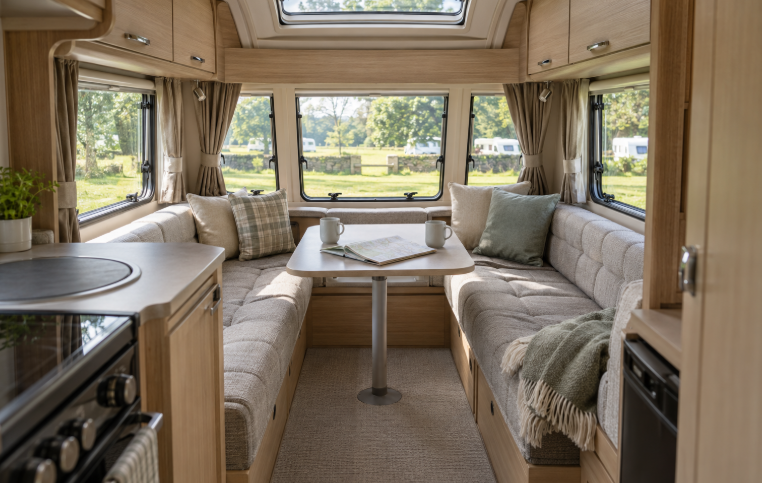
A caravan can look spacious during a viewing and feel quite different once everyone is inside on a wet afternoon. Beds, bags, cooking equipment and muddy shoes all need somewhere to go. Choosing a layout means thinking beyond the number of people it sleeps and considering how you will actually spend your time away.
New caravans offer a range of sleeping and living arrangements, but comparing them becomes easier when you picture an ordinary holiday day. Where will everyone eat breakfast? Can someone make a drink while another person gets dressed? Will putting the children to bed leave the adults somewhere comfortable to sit? These questions help reveal whether a floor plan suits your household.
Start With the People Who Will Use It Most
Choose around your regular travelling party before making allowances for occasional guests. A couple who sometimes take a grandchild away will have different priorities from a family of four travelling together every school holiday. Buying extra sleeping capacity for a rare visit may mean accepting compromises on every other trip.
Think about routines as well as numbers. If one person gets up early, having access to the kitchen without disturbing someone asleep could matter more than a larger washroom. For families with young children, consider whether evening conversation and lighting in the lounge would interfere with bedtime.
Look Beyond the Berth Count
A berth count tells you how many sleeping places are available, but it does not tell you whether each bed will be comfortable for its intended occupant. Measure the beds and, with permission, try lying down. The Caravan and Motorhome Club recommends checking berth lengths because some are unsuitable for adults. It also highlights the main fixed-bed trade-off: avoiding the nightly task of making a bed means dedicating more permanent floor space to sleeping.
Ask to see convertible beds fully assembled. Notice where the table goes, which cushions need moving and whether you can still reach the toilet. If the bedding has to be packed away every morning, check that its storage space is accessible and large enough. A routine that looks straightforward in a demonstration may feel less appealing after a long day outdoors.
Test the Lounge With Everyone Seated
During a viewing, sit down together with the dining table in place. Check whether everyone can eat comfortably and whether the person furthest from the door can get out without asking others to stand. This is particularly useful if the same seating area will serve as a dining room, evening lounge and occasional workspace.
Imagine spending several hours indoors rather than assuming you will always sit outside. There should be somewhere practical for books, drinks and children’s activities without blocking the walkway. If you travel with a dog, identify a place for its bed that leaves doors and essential access routes clear.
Try Preparing a Simple Meal
Kitchen suitability is easier to judge by imagining a familiar meal than by counting appliances. Consider where you would put a chopping board, ingredients and plates while using the hob. Check how much preparation space remains when the sink and cooker are in use.
Open the fridge and cupboards while someone stands nearby. Can another person pass through, or does the kitchen effectively close the walkway? For households that cook most evenings, these small details deserve attention. Those who usually eat out may reasonably give more space to seating or sleeping instead.
Decide How Much Washroom Space You Need
Your usual choice of campsite should influence this decision. If you expect to use site showers, you may prefer a compact washroom and more room elsewhere. If you want to shower in the caravan regularly, spend time checking the cubicle, changing space and somewhere suitable to hang towels.
Test access with bedroom partitions and doors closed. A washroom that is easy to reach during the day may be less convenient once beds are made up. Think about privacy when travelling with friends or older children, particularly where reaching the facilities means passing through someone else’s sleeping area.
Check the Practical Limits Before Committing
A suitable interior still needs to work with your towing vehicle. Check the car manufacturer’s towing limit and the permitted gross train weight, which covers the fully loaded car and trailer together. The government’s guide to towing weight and width limits explains these restrictions and where to find the relevant figures.
Storage at home deserves a separate check. Measure the available space and access route, including gates, bends and any room needed for manoeuvring. Ask for the caravan’s full external dimensions rather than relying on its interior measurements.
Before making a decision, revisit your preferred layout and walk through breakfast, a rainy afternoon and bedtime. Take notes on anything awkward and compare those observations with your other options. The most useful layout is one that makes your regular holiday routines comfortable, with compromises you understand before the first trip.

Unsure how to get from London to Dublin? Compare flights from 1h20, ferries and train-and-sail routes to find the fastest and cheapest option.
How to Get from London to Dublin: Every Route Compared
The question of how to get from London to Dublin has more answers than most travellers expect. The distance between London and Dublin is 303 miles. You can cross it by plane in under 90 minutes or turn it into a slow, scenic day by rail and sea. This guide ranks every realistic option so you can book with confidence.
The Fastest Way to Get from London to Dublin
Flying wins on speed, with no serious rival. You can fly from London Heathrow Airport to Dublin Airport in about 4h 5m door to door, with fares from roughly £76. Direct gate-to-gate time is far shorter. A direct flight from London Stansted to Dublin takes around 4h 35m once connections are counted, from about £51.
Four London airports serve Dublin daily: Heathrow, Gatwick, Stansted and Luton. Low-cost carriers dominate the route, so book early for the cheapest seats.
- Heathrow: the widest schedule, best for connections.
- Stansted and Luton: usually the lowest base fares.
- Gatwick: handy for south London and Surrey.
- City Airport: fastest access from the Square Mile.
The Cheapest Way to Get from London to Dublin
Budget hunters have two routes worth weighing. The first mixes a short domestic hop with a low-cost flight. Taking a train to London Gatwick and then flying to Dublin is listed as the cheapest combination.
The second avoids planes entirely. The best way to get from London to Dublin without a car is to train and ferry, which takes 8h 7m and costs roughly £150 to £240. It is slower, but you dodge baggage fees and airport queues.
Train and Ferry: The Scenic Route
This classic journey rewards patience. You take the train from London Euston to Holyhead, then the ferry from Holyhead to Dublin Ferryport. The rail leg runs through North Wales and Snowdonia, which makes the time pass quickly.
Ferries sail into Dublin Port, a short bus or taxi ride from the city centre. Book a combined through-ticket to lock in the lowest rail fare and a guaranteed sailing.
Driving and the Car Ferry
Bringing your own car makes sense only if you plan to tour Ireland. The standard approach is to drive north-west, then sail across the Irish Sea. One option is to drive from London to Liverpool and take a car ferry onward. Expect a long day behind the wheel plus the crossing, so this suits road-trippers rather than weekend breakers.
Which Option Should You Choose?
My verdict is simple. Fly if your priority is time, and book a Stansted or Luton departure months ahead for the best price. Take the train and ferry if you enjoy the journey itself or want to skip the airport entirely. Drive only if your trip extends well beyond Dublin.
Passports, ID and Staying Connected
Dublin sits in the Republic of Ireland, a separate country from the UK. British and Irish citizens travel under the Common Travel Area, yet airlines and ferry operators still demand photo ID, so carry a valid passport to be safe.
Your phone needs a plan too. Since Brexit, some UK networks have reintroduced roaming fees for the European Union, and Ireland counts. A simple fix is an esim from a provider such as Holafly, a digital SIM you install before departure so you land in Dublin already online. It avoids bill shock and keeps your UK number active for calls.
Frequently Asked Questions
How long is the flight from London to Dublin?
Direct flights take roughly 1 hour 20 minutes in the air. Add check-in and transfers and allow about four hours door to door.
Do I need a passport to travel from London to Dublin?
Legally, UK and Irish citizens do not under the Common Travel Area. In practice, carriers require government photo ID, so bring your passport.
Is the ferry cheaper than flying to Dublin?
Not always. Budget flights booked early often beat the combined train-and-ferry fare, which runs from about £150. The ferry wins mainly on experience and luggage freedom.
Can I take a direct train from London to Dublin?
No, because the Irish Sea lies between them. The rail journey always ends at a port, with a ferry completing the crossing to Dublin.
Which London airport is best for Dublin?
Heathrow offers the most frequent flights and smoothest connections. Stansted and Luton usually carry the lowest base fares for leisure travellers.

6 Key Qualities to Look for in a High-Quality Greens Supplement

Top Reasons to Consider Cosmetic Surgery in Turkey

Why Does My Car Make a Humming Noise at High Speeds?

Who Is Rita Johal? All About Riyad Mahrez’s Former Wife and Her Story

Who Is Caroline Hickman? Story of Caroline Hickman, Steve Coogan’s Ex Wife

Who is Sarah Vincent? All About Vic Reeves’ Ex Wife and Their Children
-
 Celebrity4 months ago
Who Is Rita Johal? All About Riyad Mahrez’s Former Wife and Her Story
-
 Celebrity4 months ago
Who Is Caroline Hickman? Story of Caroline Hickman, Steve Coogan’s Ex Wife
-
 Celebrity4 months ago
Who is Sarah Vincent? All About Vic Reeves’ Ex Wife and Their Children
-
 Celebrity4 months ago
The Life of Giselle Glasman: Actress, Theatre Publicist, and Lennie James’ Wife
-

 Celebrity4 months ago
Who Was Carolyn Cox? Biography of Nigel Havers’ Ex Wife
-

 Celebrity4 months ago
Who Is Annie Milner? Untold Story of Paul McGann’s Former Wife
-

 Celebrity4 months ago
Story of Merula Salaman and Her Life with Alec Guinness
-

 Celebrity4 months ago
Who is Eleasha Hamed? Boxing Legend Naseem Hamed’s Wife